
One of the first decisions you’ll make when choosing a security system is whether to go wired or wireless. Both can protect your home well. The right choice depends on your home’s construction, how reliable your Wi-Fi and power are, how long you plan to stay and how much installation work you’re willing to do.
Here’s how the two compare, plus how we usually recommend mixing them for homes and businesses around Charleston, Huntington and Hurricane.
What Is a Wired Security System?
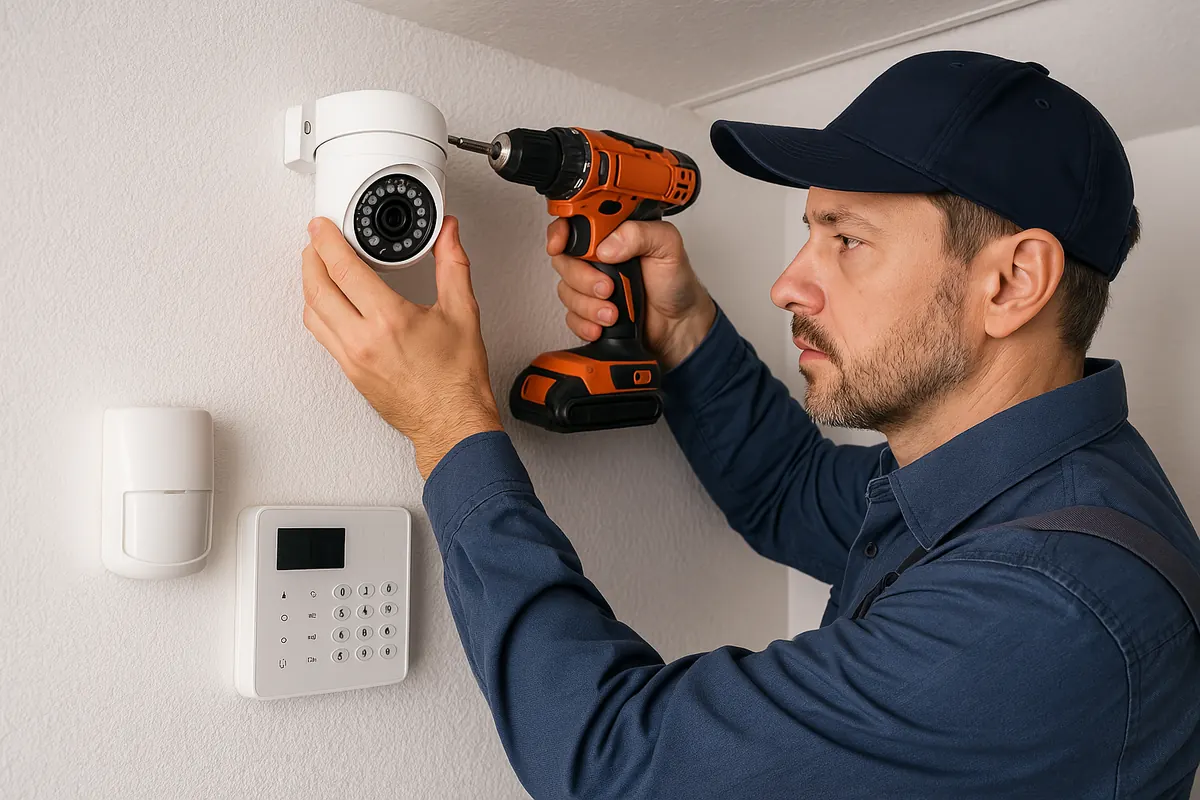
A wired system runs physical cables from each sensor, camera or keypad back to a central panel or recorder. Door contacts, motion detectors and cameras get their power and communication through those wires. Security cameras in a wired system often use Power over Ethernet (PoE), where a single network cable carries both power and video to a recorder.
What Is a Wireless Security System?
A wireless system uses battery-powered sensors and cameras that communicate with a hub or your router over radio signals or Wi-Fi. There are no wires to run through walls, which makes installation much faster. Many wireless cameras are fully battery-powered, while others plug into an outlet but send video over Wi-Fi.
Head-to-Head Comparison
| Wired | Wireless | |
|---|---|---|
| Reliability | Excellent; no Wi-Fi or battery dependence | Very good with strong Wi-Fi and fresh batteries |
| Installation | More labor; cables through walls and attics | Fast; little or no drilling |
| Upfront cost | Usually higher because of labor | Usually lower |
| Maintenance | Very little | Battery changes or recharging |
| Recording | Continuous recording to a recorder | Usually motion-triggered clips |
| Moving or expanding | Harder to relocate devices | Easy to move or add devices |
Advantages of Wired Systems
- Rock-solid reliability: wired devices don’t drop off Wi-Fi or die when a battery runs out.
- Continuous recording: wired cameras can record around the clock to a network video recorder, not just short clips when motion is detected.
- No battery maintenance: nothing to recharge on a ladder in the middle of winter.
- Works without internet: a wired camera system keeps recording locally even if your internet goes down.
- Harder to tamper with: there’s no wireless signal to interfere with.
Advantages of Wireless Systems
- Quick installation: most wireless systems can be installed in a few hours with minimal drilling.
- Flexible placement: put a camera on a fence post or a sensor on a shed door without running cable.
- Easy to expand: add sensors and cameras any time.
- Great for renters: everything comes with you when you move.
- Lower upfront cost: less labor usually means a smaller initial bill.
The Downsides to Consider
Wired: running cable through finished walls takes time, and it can be tricky in older homes with plaster walls or limited attic access. Moving a wired camera later means running new cable.
Wireless: batteries need recharging, especially in cold weather. Weak Wi-Fi leads to delayed alerts, missed clips and cameras going offline. Most wireless cameras also record short clips instead of continuous video.
What Works Best in West Virginia Homes
A few local factors tend to tip the decision:
- Rural property and outbuildings: Wi-Fi often doesn’t reach a detached garage, barn or the end of a long driveway. Wired cameras, or an outdoor wireless access point, solve this.
- Cold weather: battery cameras drain faster in freezing temperatures, so wired cameras are more dependable for the spots that matter most.
- Older homes: plaster walls and limited attic access can make running cable harder, which makes wireless sensors inside the home appealing.
- New construction: if your walls are open, it’s the perfect time to pre-wire for cameras and sensors.
The Best of Both: Hybrid Systems
For many homes, the best answer is a mix. A common setup we recommend is wireless door and window sensors inside the house, where running wire is the hardest, combined with wired or PoE cameras outside, where reliability matters most. Many modern hubs support both, so you get fast installation inside and dependable cameras outside.
Cost Over the Life of the System
Wired systems usually cost more on day one because of the labor to run cable, but they’re inexpensive to own. There are no batteries to replace, and wired cameras recording to a network video recorder don’t need a cloud subscription to keep footage. Wireless systems cost less to install, but you’ll replace or recharge batteries over the years, and many wireless cameras need a monthly plan to save recordings. Over five or more years, the total cost often ends up closer than the upfront prices suggest.
Questions to Ask Yourself Before You Decide
- How long will you live here? If you’re staying for years, wired cameras are a worthwhile investment. If you might move soon, wireless comes with you.
- How strong is your Wi-Fi where devices will go? Check the signal at the garage, back door and driveway, not just in the living room.
- Do you want continuous recording? If you want to review any moment of the day, wired cameras with a recorder are the way to go.
- Are you okay climbing a ladder to charge batteries? If not, wired or solar-assisted cameras save a lot of hassle.
- Is your attic or crawlspace accessible? Easy access makes running cable much faster and less expensive.
For Businesses
Most businesses benefit from wired cameras recording continuously to a recorder, because you often need to go back and review footage of a specific time, not just a motion clip. Wireless sensors still work well for doors and back offices. See our guide to why small businesses need a security system for more.
Get a Recommendation for Your Property
The right answer depends on your home, your Wi-Fi and how you’ll use the system. CC Technologies installs wired, wireless and hybrid security systems in Charleston, Huntington and Hurricane. We’ll look at your property and recommend the setup that makes the most sense, then install it cleanly and set up the app on your phone.